From Rules to Intelligence: Governing the Engineering Lifecycle
The real cost of making AI output defensible, and what it takes to get a solution into your environment.
Details
AI can be the right answer and still never make it into your workflow.
In Part 1, we established the architecture: evaluation, not authoring, is the new constraint, and the Scribe / Gavel / intelligence-layer model solves it.
The question regulated buyers are bringing into the room first has shifted. It is no longer does this work? It is how does it get into our environment, on our terms, into where we work?
Horizontal AI already does a good-enough job at the obvious work, drafting, restructuring, and summarizing, and that capability is increasingly built into the platforms engineers already own. So the real question becomes: if generation is already good enough, why do I need anything more?
Here’s the catch: good-enough generation isn’t the same as trustworthy output. The gap is paid for in engineering time. It rarely gets measured directly and shows up as habits. Engineers reformat requirements into EARS to feed the tool, then reformat the output back into the system of record. One or two people learn to prompt it well enough; everyone else queues behind them. A shadow document grows in parallel. Junior staff quietly absorb input prep as their de facto job, becoming the seamless in ‘seamless AI.’ The cost is real, and it compounds — it just seldom reaches a spreadsheet.
And even with the right architecture, the deal isn’t won on value. It’s won on delivery. What the market is asking for isn’t a single product. It’s a deployment matrix.
In this recording, you will learn:
- Why quality requirements are necessary but not enough, and the hidden patterns that reveal the tax your engineers are already paying.
- Why the buyer’s question has moved from value to delivery, and what the deployment matrix and MCP bridging actually require.
- The distinction between MCP-as-feature and MCP-as-substrate, and why one locks the capability inside a single tool suite while the other travels with your team and evolves as your AI does.
- Why security is the audience, not the obstacle, and how tenant isolation, deployment options including on-prem and air-gapped, and DPA-readiness become part of the product rather than a custom track.
Why watch?
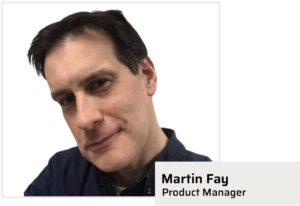
Watch Morgan Kostal and Martin Fay in a 30-minute discussion built for the engineers and engineering leaders living this shift firsthand. AI is already in your team’s workflow. The real questions now are whether the output is defensible, not just generated, and whether the solution that makes it auditable can run in the environment you actually operate in.
You’ll leave with a more realistic way to think about what AI in regulated engineering really costs, where the hidden work is piling up on your team, and what has to hold true for it to stand up under audit.